
State of Care
DONATE
Fiscally Sponsored by The Gotham Film & Media Institute
Make a tax-deductible donation to support production.

Brief Project Summary
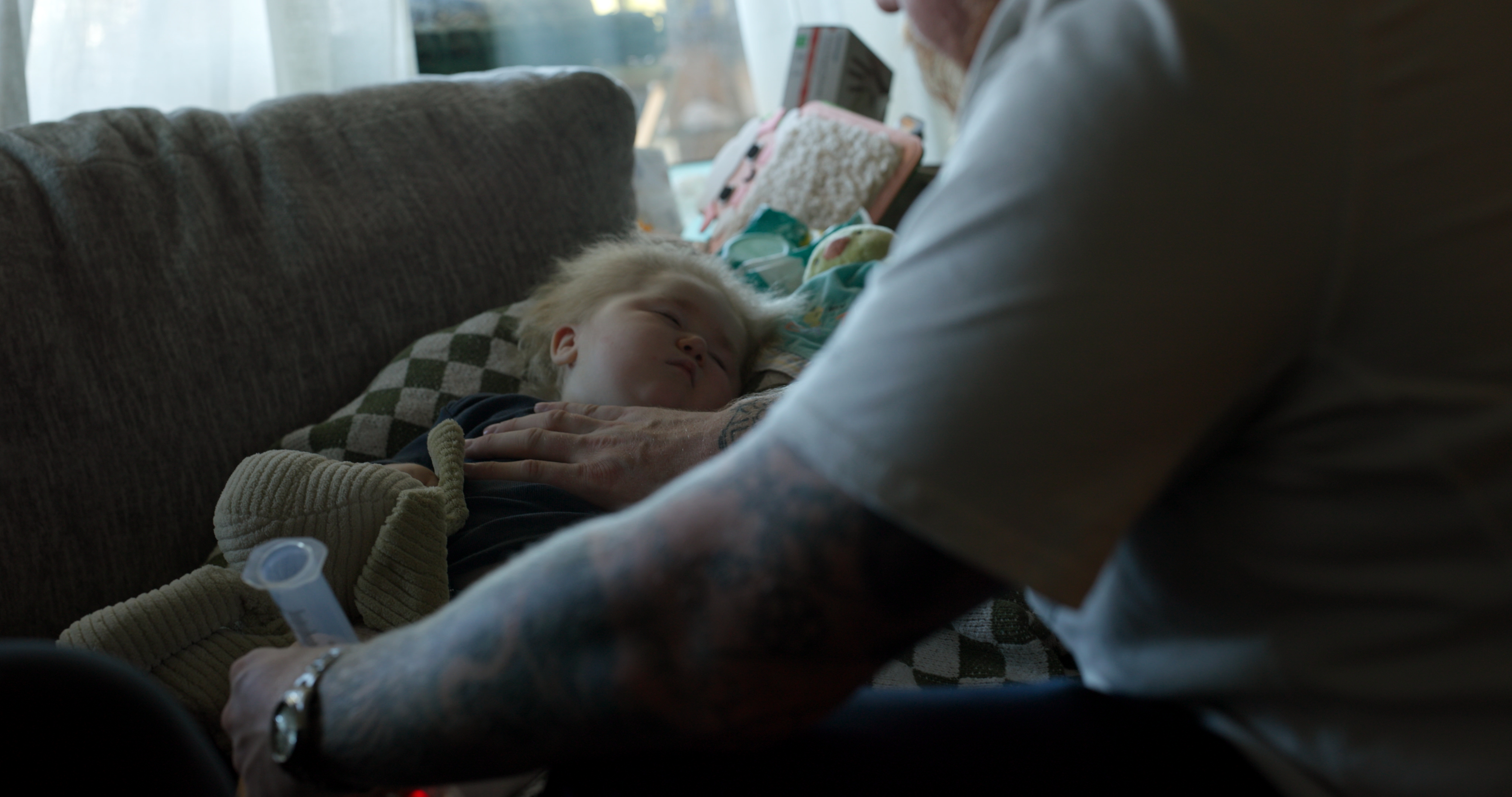
At the anatomy scan for her son, Hallie Nesbitt knew her arduous journey through the Texas medical system was only beginning. Parents and caregivers must overcome confusing paperwork, restrictive qualifications, and long waitlists to get sufficient care for their medically disabled children. In a state known for its pride, hospitality, and love of life, Texas parents unite to support each other in the struggle to get assistance for the most vulnerable.
Story
State of Care journeys with Hallie Nesbitt as she advocates for her medically disabled son and families like hers. Hallie’s son has hydrocephalus, is blind and deaf, and requires skilled care. In the summer of 2025, the Nesbitt family was informed by their insurance company that funding for their child’s home-care nurse had run out. Feeling abandoned by insurance and the state, Nesbitt fought to keep her child from falling through the cracks of an apathetic healthcare system. She began to speak out and her story spread, connecting her with thousands of other families like hers. Parents of medically disabled children must balance caretaking, working full time, endless doctors appointments, and daily life while fighting for proper care for their children. Nesbitt and other caregivers spend unnecessary amounts of time and energy navigating bureaucratic medical paperwork. The Texas healthcare system is often out of touch with their lived experiences and needs, as funding and coverage continues to be cut. Nesbitt has found support and strength in community, both locally and online, and these families will continue to advocate for their children. This candid, vèrité documentary reminds the audience that the medically disabled are not just case numbers.
Artistic Approach
Grady Ln Boutique is a unique clothing shop in downtown McKinney, TX, owned by Hallie Nesbitt. In spring of 2025, my wife, Hannah, and I worked with Grady Ln to have custom hats made for our film club. We became friends with Hallie, her husband (Elijah), and her two boys (Grady and Callahan). At the time, Hannah and I were working on a series of short films featuring business owners and artists in our area. Our focus changed when Hallie told us they were paying out of pocket for Callahan’s nurse, Jay. I wanted to do whatever I could to help. Our initial short film introducing Hallie’s story captured the attention of the local community who rose up to support the Nesbitts.
For 15 years, I have been capturing stories of families in need. From special needs orphanages in Ensenada , to a foster father of children with severe medical disabilities , families without adequate shelter all over the world. I am often asked, “Isn’t it hard to be a fly in the room in certain scenarios?” It can be, but it’s an honor. If I can make one person feel empathy for the subject in frame, I am doing my job.
What I capture are my memories. The camera remains close, patient, and unobtrusive, prioritizing trust, time, and lived experience over constructed storytelling. Master interviews provide reflection and grounding directly from participants, while vérité footage captures daily life as it unfolds without narration or external framing.
The families in this film have days that are good, awful, busy, triumphant, and everywhere in between just like people without medically disabled children. The transparency and resilience I am allowed to capture is what I believe will grab audiences and ignite curiosity and a passion to defend the disabled.
Production Status and Plan
Currently we have been filming with families for the past seven months guided by Hallie and the relationships she has with other families. Nesbitt has also been sharing selected material in short-form formats during production that has created new connections and support from community members. These releases are not meant to define the final structure but to allow the project to exist in the present, engaging audiences while the larger narrative continues to take shape. By working this way, the project remains flexible and responsive, letting the story evolve over time rather than being confined to a fixed format from the start. The film will continue production over a 12–18 month period, with 1–2 shoot days per month. This structure allows us to accommodate the families for health reasons, scheduling, and waiting to hear back from insurance companies and the state.
The project is primarily based in North Texas, with additional travel planned to Austin as Hallie and other parents speak at the Texas State Capital. We will be in homes, parks, meetings, and doctors visits.
We do not know the full scope of the next 11 months of production. Many of the children featured are on oxygen 24/7, a fever away from their parents worst day. Commenters online have suggested “move out of state” to get the funding these family needs and some have followed that advice as their only hope. We will tell the story that best represents the families featured whatever may come their way.
Project Goals
I can not single-handedly reform unfeeling bureaucratic systems or inadequate healthcare services. What I can do is give audiences raw moments highlighting the real humans affected by policy and red tape. When viewers are presented with genuine stories of how society has failed our most vulnerable members, it will create a link of empathy that spreads. My goal is to inspire collective action to create a better healthcare system that serves all people.
The AFS Grant funds will help cover the cost of production over the next 12 months as we continue to capture the stories of families across North Texas. This will be my first time directing a feature film, and as with every artistic endeavor, it continues to challenge me. Every day these kids are alive is a miracle and I am struck by that with every intimate moment. This project has fueled a determination within me to use the power of film to shed light on injustice and inspire change for these real families in our community.
Viewers and peers in my craft have commented that viewing these stories ignites a desire to help the families and ‘rage out’ at the systems. We released short scenes on TikTok through Hallie's personal account that took her from 8,000 followers in November to over 120,000 followers today. We plan to release a trailer for the film through her TikTok account that links people to in-person or online screenings when the film is released.
We will submit to film festivals in every major city in Texas—Austin, Houston, Dallas, and San Antonio. The goal is to market this to a Texas-first audience and encourage individuals to host local screenings in their homes. Then we will pursue online distribution with ticket sales benefiting children with disabilities.