
EMPATHY is cool.
A documentary series
I didn’t set out to make a statement.
I set out to pay attention.
This film is about my friend Hallie and her family
The Nesbitts. @hallieiscool TikTok
We call the series Empathy is cool because empathy shouldn’t be radical.
But right now, it is.
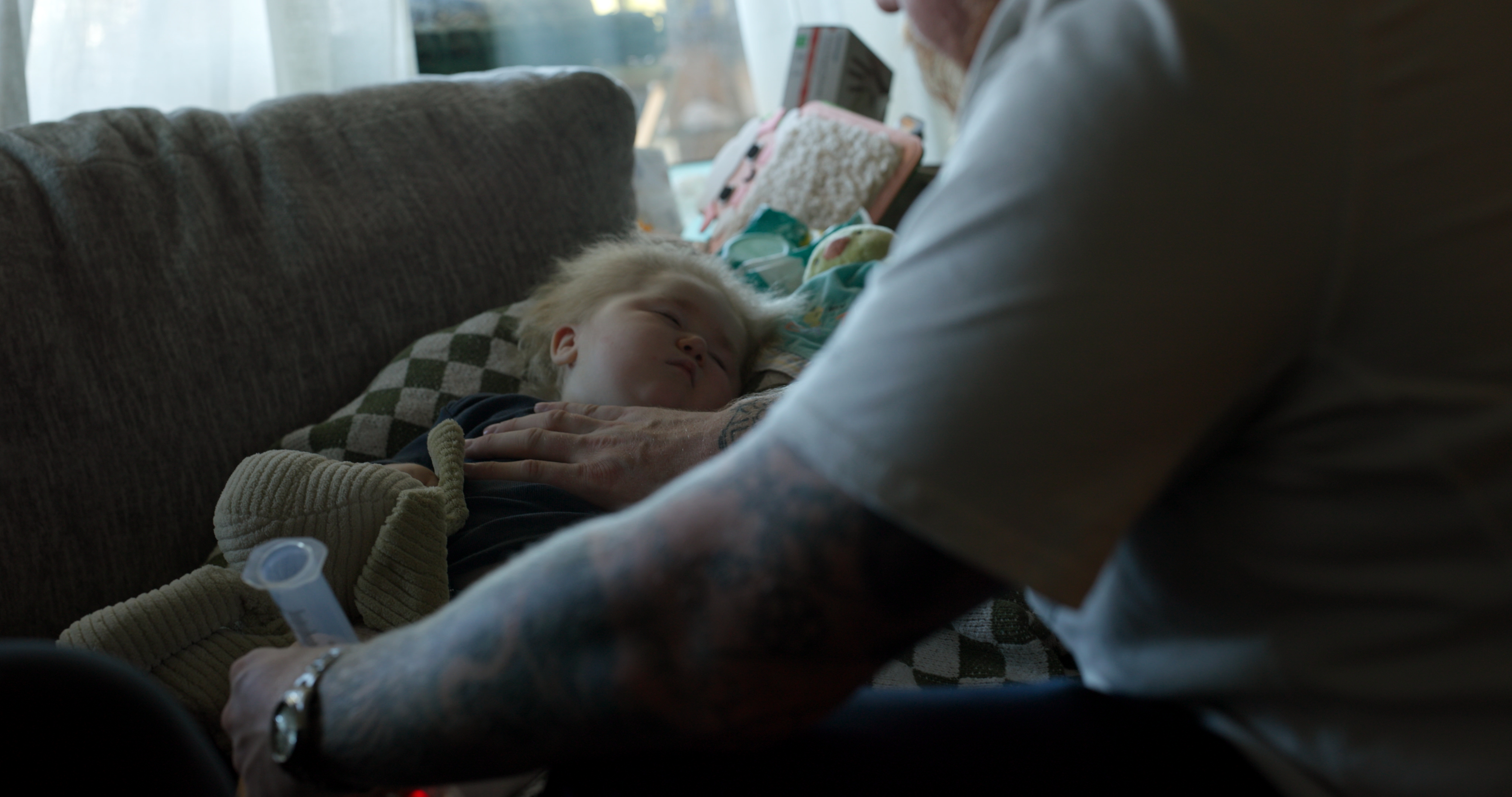
EMPATHY is cool is an ongoing documentary series centered on my friend Hallie and her family, the Nesbitts: Hallie, Elijah, Grady, and Callahan. The project began not as a statement, but as an act of staying close. I set out to pay attention to what daily care actually looks like when systems quietly fail and families absorb the impact.
Callahan, who is two, was born with hydrocephalus and lives with multiple medical disabilities. He requires constant monitoring and specialized care. Although the family relies on an in-home nurse, insurance coverage only accounts for a limited number of hours. Since July, the family has been paying out of pocket to maintain continuity of care—an arrangement that has become increasingly difficult to sustain.
At the same time, Hallie has become a visible and trusted voice online by sharing her family’s lived experience with honesty and restraint. Over the past two months, her story has reached millions of viewers on TikTok—not because it was sensationalized, but because people recognized themselves in it. What emerged was not passive consumption, but conversation. Empathy became collective.
Hallie’s work extends beyond storytelling. She is also the owner of a size-inclusive clothing store and is in the process of developing her own size-inclusive clothing line. This work reflects the same values at the center of EMPATHY is cool: accessibility, dignity, and care as design principles rather than afterthoughts.
My approach to this series is observational and relational. I film over time, allowing moments to unfold without commentary or dramatization. The work slows the story down—not to heighten emotion, but to honor care as labor, presence, and sustained attention.
I believe we do not lack compassion; we lack proximity. EMPATHY is cool bridges that distance by remaining close—inviting viewers to see care not as an exception, but as a shared human reality. The project asks what might change if empathy were treated not as a feeling, but as something we build around.
The next phase of EMPATHY is cool will involve traveling across Texas to document families with children with disabilities who are experiencing instability due to loss or limitation of medical insurance coverage. Hallie and the Nesbitt family remain the project’s grounding presence.
Filming will continue in short, observational segments captured over time. These segments will be shared publicly throughout the process, allowing the work to remain accessible and responsive while the larger documentary continues to develop. This approach enables ongoing engagement without requiring narrative closure.
Production will remain intentionally lightweight, with filming taking place in homes and everyday environments using a minimal setup. Ethical proximity, consent, and trust will guide all filming decisions.
Post-production will focus on pacing and continuity. Short segments will be edited with restraint, preserving silence and context, while long-form editing will occur in parallel as material accumulates.